BLOG

on

Introduction

India is undergoing a remarkable transformation and energy diversification in its energy sector. With rising fuel demand, volatile crude oil prices, and global pressure to reduce carbon emissions, the country has put biofuels and energy diversification at the heart of its long-term strategy. From ethanol blending in petrol to biodiesel production, these policies are reshaping not only the fuels market but also allied industries—including the lubricant sector.

For lubricant makers, this transition presents both challenges and opportunities. As traditional petroleum-based energy sources give way to renewable and bio-based alternatives, lubricants must evolve to meet new performance standards, environmental regulations, and sustainability goals.


India’s Biofuels and Energy Diversification Strategy

India has set ambitious goals for its biofuel adoption and overall energy diversification:

Ethanol Blending: The government has targeted 20% ethanol blending in petrol by 2025, an initiative expected to save around US$4 billion annually in crude oil imports. Ethanol derived from sugarcane, rice, wheat, and corn is being integrated rapidly into India’s fuel mix.

Biodiesel Push: Under the National Biodiesel Mission, India aims to replace up to 20% of diesel with biodiesel. Feedstocks such as jatropha and used cooking oil are being explored, although adoption has been slower than ethanol.

Financial Incentives: The government provides subsidies, financial support, and tax reliefs to encourage private investment in ethanol and biodiesel production.

Energy Diversification: Beyond biofuels, India is promoting solar, wind, hydrogen, and natural gas as part of its strategy to reduce dependence on imported crude oil.

Together, these measures are laying the foundation for a cleaner, more self-reliant energy ecosystem.


Impact on Energy and Oil Demand

bio fuel 3 1

India’s energy demand is rising sharply due to industrial growth, urbanization, and infrastructure expansion. However, biofuel adoption directly affects fossil fuel consumption and crude oil imports.

Reduced demand for crude oil means more stability in India’s energy bills and less exposure to global oil price shocks.

Biofuel integration alters the demand for base oils, additives, and fuel-compatible lubricants.

Diversification into alternative energy sources reshapes the industrial landscape, creating demand for specialized lubricants in solar, wind, and EV sectors.

This evolving energy matrix means lubricant manufacturers must keep pace with new fuel types, new engines, and sustainability mandates.


Implications for Lubricant Makers

Market Outlook

India’s industrial lubricant market is valued at approximately US$7.25 billion in 2024 and is projected to reach US$9.22 billion by 2030, with a CAGR of around 4.3%. Growth is driven by construction, automotive, mining, and power generation. However, biofuel adoption will transform the way lubricants are formulated, marketed, and regulated.

Shift Toward Sustainable Lubricants

Eco-friendly Solutions: With biofuels gaining traction, there is rising demand for biodegradable and low-toxicity lubricants that reduce environmental impact.

Synthetic Lubricants: These offer higher performance, lower emissions, and compatibility with modern engines that run on ethanol-blended fuels.

Bio-based Lubricants: Derived from vegetable oils, they align with India’s broader clean energy transition.

Extended Producer Responsibility (EPR)

From April 2024, India extended EPR obligations to used oils, requiring lubricant makers to collect and recycle a percentage of the oil they sell.

Initial target: 5% collection in 2024–25.

Rising gradually to 50% by 2030–31.

Although India has nearly 1 million tons of rerefining capacity, actual output in 2022 was only 27 kilotons, showing massive room for growth.

This means lubricant manufacturers must invest in collection networks, recycling partnerships, and circular business models to remain compliant and competitive.

bio fuel 2

Innovation and Customization

EV Lubricants: As electric mobility expands, demand for specialized coolants, greases, and thermal management fluids will grow.

Industrial Solutions: Heavy machinery, mining, and manufacturing sectors require lubricants that perform under extreme conditions while meeting sustainability norms.

Digital Lubrication: IoT-enabled monitoring and predictive maintenance are revolutionizing how lubricants are used and serviced.

Key Challenges

Raw Material Volatility: Fluctuating crude oil prices impact base oil and additive costs.

Technical Awareness Gap: Many end-users lack knowledge of advanced lubricants, slowing adoption.

Regulatory Pressure: Stricter environmental norms require continuous R&D investment.

For lubricant makers, adapting to this dynamic environment is not optional—it is essential for survival and growth.


The Role of RBM Oil Corporation

bio fuel 4 3

RBM Oil Corporation, established in 2016 and headquartered in Pune, Maharashtra, has positioned itself as a leading manufacturer, exporter, importer, retailer, and trader of base oils, automotive lubricants, industrial oils, and greases. The company’s diverse portfolio includes:

Engine oils (e.g., Gusto 15W40).

Hydraulic oils (e.g., EP68).

Cutting and process oils.

Specialty greases and gear oils.

How RBM Connects with India’s Energy Transition

Eco-Friendly Expansion: As India moves towards renewable energy, RBM has the opportunity to expand into bio-based and biodegradable lubricants, aligning with the nation’s sustainability goals.

EPR Readiness: With used-oil recycling mandates in place, RBM can build collection partnerships to reinforce its green credentials.

Strategic Location: Being based in Maharashtra—one of India’s industrial hubs—positions RBM to cater to high-growth markets across automotive, manufacturing, and power sectors.

Innovation Potential: By investing in R&D for advanced formulations, RBM can strengthen its brand as a forward-looking, customer-centric lubricant provider.


Future Outlook and Conclusion

India’s biofuel and energy diversification journey is more than just a policy—it is a paradigm shift. For the lubricant industry, it signals a future where:

Bio-based and synthetic lubricants will dominate.

Circularity through EPR will become standard practice.

Digital and smart lubrication solutions will be the norm.

Customer education will play a vital role in adoption.

Lubricant makers who embrace this transformation will not only stay competitive but also become key enablers of India’s sustainable industrial growth.

For companies like RBM Oil Corporation, this is the perfect moment to innovate, diversify, and reinforce their commitment to quality and sustainability. As India accelerates its clean energy transition, lubricant makers have a golden opportunity to grow alongside the nation’s progress.


on
image 1 4

Introduction

The global automotive industry is experiencing one of the most disruptive shifts in its history. The rise of electric vehicles (EVs) is transforming how people drive, how businesses operate, and how energy is consumed. While EVs are celebrated for their potential to reduce carbon emissions and dependency on fossil fuels, their growth is also sending ripple effects across related industries—especially the oil and lubricant industry.

For decades, lubricants have been indispensable for vehicles powered by internal combustion engines (ICEs). They reduce friction, prevent wear, cool engine components, and extend vehicle life. But what happens when a vehicle no longer needs traditional engine oil? Does the lubricant industry face decline—or is it evolving into something more advanced, eco-friendly, and specialized?

This blog dives deep into how the rise of EVs is reshaping the oil and lubricant industry, the new types of fluids and greases EVs require, the opportunities and challenges ahead, and how companies like RBM Oil Corporation are adapting to this future.


EV Growth and Its Impact on Traditional Lubricants

The rapid rise of electric vehicles is undeniable. According to the International Energy Agency (IEA), more than 14 million EVs were sold globally in 2023, and the number is expected to surpass 40 million annually by 2030. As EV adoption increases, the reliance on traditional automotive lubricants is decreasing.

In conventional ICE vehicles:

  • Engine oils are crucial for lubrication and cooling.
  • Transmission fluids manage multi-gear systems.
  • Exhaust system greases protect against corrosion.

But EVs eliminate or reduce many of these needs:

  • No engine oil is required since there’s no combustion process.
  • Simpler drivetrains reduce the need for multi-gear transmission oils.
  • Fewer moving parts mean less reliance on high volumes of lubricants.

This is a fundamental challenge for the lubricant industry, where engine oils represent nearly 50% of automotive lubricant demand.


Why Electric Vehicles Still Need Lubricants

Contrary to popular belief, EVs are not lubricant-free. They may not need engine oil, but they rely on specialized fluids and greases to function efficiently and safely:

  1. E-Transmission Fluids
    EV drivetrains operate at high speeds and temperatures. Specialized transmission fluids lubricate gears while also providing electrical insulation.
  2. Battery Thermal Management Fluids
    EV batteries must operate within a narrow temperature range. Dielectric coolants regulate heat without conducting electricity, ensuring safety and performance.
  3. E-Motor Lubricants
    Electric motors need low-viscosity fluids that reduce friction while maintaining efficiency under high rotational speeds.
  4. Greases for Bearings and Chassis
    EVs still require greases for wheel bearings, suspension systems, and steering mechanisms.
  5. Brake Fluids
    While EVs use regenerative braking, they still require specialized brake fluids compatible with advanced braking systems.

This creates a new and growing market segment: EV-specific lubricants.


EV-Specific Lubricants: The Industry’s New Frontier

The future of lubricants lies in fluids designed specifically for electric mobility. These include:

  • Dielectric Fluids – Non-conductive coolants that prevent short-circuiting while managing heat in EV batteries.
  • Low-Viscosity E-Fluids – Reduce drag in high-speed motors, improving range and efficiency.
  • Thermally Conductive Lubricants – Improve heat dissipation from critical EV components.
  • Long-Life Fluids – Designed for the lifespan of the vehicle, reducing the need for replacements and waste.

These innovations highlight how the oil and lubricant industry is evolving rather than disappearing.


Sustainability: A Shared Priority Between EVs and Lubricants

Electric vehicles and evolution in oil and lubricant industry

Both the EV revolution and the lubricant industry are driven by the need for sustainability:

  • Bio-based lubricants – Produced from renewable vegetable oils and esters, reducing reliance on petroleum.
  • Re-refined oils – Recycling and purifying used lubricants into high-quality base oils.
  • Eco-friendly greases – Biodegradable formulations that prevent soil and water contamination.
  • Longer drain intervals – Reducing waste oil generation and lowering environmental impact.

As EVs grow, the demand for eco-friendly lubricants will rise in parallel, making sustainability a central theme for the industry’s evolution.


Companies Leading the EV-Lubricant Transition

Several global players are already pioneering EV-specific lubricants:

  • Shell – Developed its E-Fluids and E-Greases line tailored for EVs, covering batteries, e-motors, and transmissions.
  • Castrol (BP) – Launched Castrol ON, focusing exclusively on EV thermal management and drivetrain fluids.
  • TotalEnergies – Offers advanced dielectric coolants for next-generation EV batteries.
  • Fuchs – Provides a wide range of specialty e-fluids and greases for electric mobility.
  • ExxonMobil – Developing synthetic lubricants with longer life cycles for EV systems.

These companies are proving that adaptability and innovation are key to staying competitive in an EV-driven world.


RBM Oil Corporation: Driving Sustainability in the EV Era

In India, RBM Oil Corporation is positioning itself as a forward-looking leader in sustainable lubrication. Understanding that the future of mobility is electric, RBM is actively:

  • Researching EV-compatible lubricants for drivetrains, batteries, and thermal systems.
  • Promoting bio-based and eco-friendly oils to align with India’s green energy transition.
  • Supporting fleet operators who are transitioning from ICE to EV with training and tailored lubrication solutions.
  • Encouraging waste oil recycling and re-refining to minimize environmental harm.

By blending innovation with sustainability, RBM Oil Corporation is ensuring that it remains a key partner in the EV ecosystem, while also serving traditional markets.


Opportunities for the Lubricant Industry

Instead of decline, the lubricant sector has new growth opportunities:

  • Premium EV Fluids – Specialty formulations command higher margins.
  • Aftermarket Demand – EVs still require maintenance, greasing, and brake fluids.
  • Industrial Applications – Lubricants for EV battery production, assembly lines, and motor manufacturing.
  • Sustainability Branding – Companies that embrace eco-lubricants can align with ESG and net-zero goals, appealing to eco-conscious customers.

Challenges in the EV-Lubricant Transition

image 2 5

Despite the opportunities, challenges remain:

  • Decline in ICE demand – Traditional engine oils will see a significant reduction in volume.
  • High R&D investment – Developing advanced EV fluids requires time and capital.
  • Lack of global standards – No universal specifications yet for EV lubricants.
  • Awareness gaps – Mechanics, service providers, and consumers must be educated about EV-specific lubrication needs.

The Road Ahead: EVs and Lubricants in 2025 and Beyond

By 2025, EV adoption is expected to accelerate further, with government policies, subsidies, and charging infrastructure fueling growth. For the oil and lubricant industry, this means:

  • Rapid scaling of EV-specific product lines.
  • Greater focus on bio-based and eco-friendly lubricants.
  • Expansion of recycling and re-refining initiatives.
  • Stronger partnerships between OEMs and lubricant companies to co-develop EV solutions.

Far from being obsolete, lubricants will continue to play a critical role in the EV ecosystem—but in a smarter, greener, and more specialized form.


Conclusion

The rise of electric vehicles marks the beginning of a new era for the oil and lubricant industry. While traditional engine oils may decline, the demand for EV-specific fluids, eco-friendly lubricants, and advanced thermal management solutions is set to grow rapidly.

Global players like Shell, Castrol, TotalEnergies, and Fuchs, along with Indian leaders such as RBM Oil Corporation, are showing how innovation and sustainability can go hand in hand.

The lubricant industry isn’t fading away—it’s evolving to match the electrification of mobility. By embracing this change, lubricant manufacturers can reduce their environmental impact, unlock new business opportunities, and play a central role in the world’s transition to cleaner, greener transportation.

The road ahead may be electric, but it will still be powered by the right lubricants.

on

Introduction: A Tariff Shock That’s Making Waves

In February 2025, U.S. President Donald Trump stunned both Wall Street and New Delhi by announcing a 50% tariff on all Indian exports to the United States. The reason? India’s continued import of discounted Russian crude oil despite ongoing Western sanctions on Moscow. The move, described by the Trump administration as “a necessary step to punish countries that bankroll Russia’s war machine,” instantly set off alarms across global trade, energy, and manufacturing sectors.

This was not a symbolic measure — with the U.S. being one of India’s largest export markets, the tariff is poised to affect billions of dollars’ worth of goods, ranging from pharmaceuticals and textiles to refined oil products and lubricant additives. The question now is not whether it will have an impact, but how deep and far-reaching those effects will be.


The Road to a 50% Tariff: How We Got Here

The roots of this tariff lie in the geopolitical shifts following Russia’s 2022 invasion of Ukraine. Western nations, led by the U.S., imposed sweeping sanctions on Russian energy exports, including a G7-led price cap on crude oil. The aim was simple — limit Russia’s revenues while keeping global oil supplies stable.

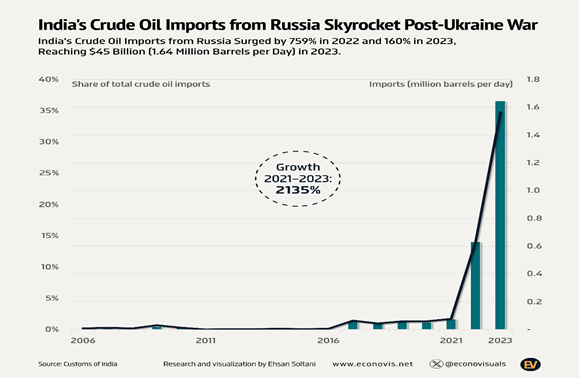
India, however, took a different path. Citing its own energy security needs, it ramped up imports of deeply discounted Russian crude, refining much of it domestically and, in some cases, exporting the refined products worldwide. By 2024, Russia had overtaken Iraq and Saudi Arabia to become India’s top crude oil supplier.

For Washington, this was a red flag. U.S. policymakers argued that India’s purchases were undermining the sanctions regime by giving Moscow a steady revenue stream. As Trump returned to office in January 2025, he made it clear he would use trade leverage to punish countries “helping Russia’s economy.” The result: the February tariff announcement.


What Exactly Is a Tariff and How Does It Work?

A tariff is essentially a tax on imported goods. When U.S. importers bring products from India, they must now pay an additional 50% of the product’s value to U.S. Customs.

Example:

  • A U.S. auto manufacturer imports $20 million worth of engine lubricant additives from India.
  • Under the old system (say, 5% tariff), the cost to the importer was $21 million.
  • Now, with a 50% tariff, the cost jumps to $30 million.

That extra $10 million could mean higher prices for American consumers, shrinking profit margins for businesses, or shifting supply chains to other countries. In this way, tariffs act as both a financial penalty and a political weapon.


image 6

Why Target India When Others Buy Russian Oil?

The Trump administration argues that India’s sheer scale makes it a bigger problem. Unlike smaller buyers of Russian crude, India imports millions of barrels each month and has become a central player in the “shadow trade” — the complex network of tankers, insurance loopholes, and payment systems used to keep Russian oil flowing despite sanctions.

Also, India’s refining capacity allows it to turn Russian crude into gasoline, diesel, jet fuel, and base oils — some of which may even end up in the U.S. indirectly. This blurs the line between direct Russian imports and products made from Russian-origin oil, frustrating Washington.


The Oil and Lubricant Connection

This tariff is not just about crude oil — it has a knock-on effect for the lubricant industry. Here’s why:

  1. Base Oils Supply: India refines Russian crude into base oils, a core ingredient in industrial lubricants. A tariff makes these imports costlier for U.S. lubricant manufacturers.
  2. Additive Chemicals: India is a significant exporter of lubricant additives and specialty chemicals. Tariffs could force U.S. firms to source from Europe or the Middle East, potentially at higher prices.
  3. Finished Lubricants: While most U.S. lubricant demand is met domestically, certain niche products from India could now be priced out of the market.

The result? Higher production costs for U.S. manufacturers, possible price hikes for industrial buyers, and a shift in global lubricant trade flows.


The Immediate Economic Fallout

For India:

  • Indian exporters now face reduced competitiveness in the U.S. market.
  • Industries like pharmaceuticals, textiles, automotive parts, and refined petroleum products will feel the pinch.
  • Export-oriented refiners may redirect shipments to Africa, Latin America, or Southeast Asia, but replacing the U.S. market won’t be easy.

For the U.S.:

  • Importers must either absorb the higher costs or pass them on to consumers.
  • Small businesses dependent on Indian goods could be disproportionately affected.
  • Alternative sourcing from other countries (Vietnam, Mexico, Indonesia) will take time and investment.

image 1 7

Global Trade and Geopolitical Implications

The 50% tariff is more than an economic tool — it’s a geopolitical signal. It tells the world that the U.S. is willing to use trade penalties to influence countries’ foreign policy decisions.

Potential ripple effects:

  • Strained U.S.–India relations: This comes at a time when Washington needs New Delhi as a counterbalance to China.
  • Shift toward BRICS+ alliances: India may deepen trade ties with Russia, China, Brazil, and South Africa.
  • Global oil market adjustments: Russian oil will still find buyers, but trade routes and refining destinations may change.

Short-, Medium-, and Long-Term Outlook

Short Term (2025–2026):

  • Supply chain disruptions in industries reliant on Indian imports.
  • Increased oil and lubricant prices in certain sectors.
  • Diplomatic negotiations between the U.S. and India — possibly leading to exemptions for critical goods.

Medium Term (2027–2028):

  • India accelerates diversification of export markets.
  • U.S. companies restructure supply chains to avoid tariff costs.
  • Russian oil trade shifts further toward non-dollar payment systems, weakening U.S. financial influence.

Long Term (2029 and beyond):

  • Potential rebalancing of global trade blocs.
  • If tariffs remain, U.S.–India economic ties may permanently cool.
  • The lubricant industry may establish new refining hubs closer to end markets to bypass political risk.

Conclusion: A Test of Economic Diplomacy

Trump’s 2025 decision to impose a 50% tariff on Indian goods is not just a trade measure — it’s a litmus test for how far economic pressure can go in shaping foreign policy. For India, it’s a challenge to maintain its energy independence while protecting its export markets. For the U.S., it’s a gamble that trade leverage will change geopolitical behavior.

In the oil and lubricant industries, the ripple effects are already being felt. Whether this becomes a temporary disruption or a long-term reshaping of trade flows will depend on how both sides navigate the months ahead. One thing is certain: in the intertwined world of energy and trade, tariffs are no longer just about economics — they are about power.

For companies like RBM Oil Corporation, which operates extensively in the global lubricants and specialty oil market, the U.S. tariff on India over Russian oil imports introduces a new layer of uncertainty. While RBM primarily sources base oils and additives from a diverse supplier network, India’s role as a major hub for blending and re-exporting lubricants means that cost pressures could ripple through the supply chain.

Higher input costs, logistical delays, and shifts in trade routes could impact margins, forcing RBM and similar firms to re-evaluate sourcing strategies and pricing models. Moreover, if India redirects more of its Russian crude-based products toward Asian and African markets to bypass U.S. tariff penalties, RBM might face intensified competition in those regions—challenging its market positioning but also opening opportunities to leverage its reputation for quality and compliance in premium segments.

on
b1 8

Introduction

The lubricant industry has long been linked to traditional petroleum-based oils, a cornerstone of modern machinery and vehicles. However, as climate change awareness rises globally and India accelerates its sustainability journey, the lubricant sector faces growing pressure to reinvent itself. Can lubricants be eco-friendly? The answer is a promising “yes”. This blog explores the evolving landscape of sustainable lubricants, challenges in their adoption, emerging business opportunities, and what this means for the future of the Indian lubricant market.


1. The Environmental Impact of Conventional Lubricants

Conventional lubricants are typically derived from crude oil, making them inherently dependent on finite fossil fuel resources. Their environmental footprint includes:

  • Non-biodegradability: Traditional mineral oils degrade slowly, persisting in soil and waterways, causing long-term ecological damage.
  • Toxicity: Many mineral-based lubricants contain harmful additives that can poison aquatic life and contaminate soil.
  • Disposal Challenges: Improper disposal of used oil leads to severe pollution; oil spills contaminate groundwater and soil, harming agriculture and human health.

India, with its vast industrial and agricultural activities, produces a significant volume of used lubricants annually, posing an urgent need for sustainable alternatives.


2. What Makes Lubricants Eco-Friendly?

b2 9

Eco-friendly lubricants are designed to minimize environmental impact throughout their lifecycle — from raw material sourcing to disposal. Key characteristics include:

  • Biodegradability: Rapid breakdown in natural environments without harmful residues.
  • Low Toxicity: Safe for aquatic and terrestrial ecosystems even if leaks occur.
  • Renewable Feedstocks: Made from plant-based oils such as jatropha, pongamia, sunflower, or canola instead of petroleum.
  • Energy-Efficient Manufacturing: Produced with reduced carbon emissions and energy consumption.
  • Recyclability: Can be re-refined or reused to reduce waste.

3. Types of Eco-Friendly Lubricants Available Today

b3 10
  • Biolubricants: Derived from vegetable oils, biolubricants offer excellent lubricity and biodegradability. Modified to improve oxidative stability, they suit applications like hydraulic fluids, engine oils, and greases.
  • Synthetic Esters: These semi-synthetic lubricants combine the biodegradability of esters with enhanced thermal and oxidation resistance, making them suitable for demanding applications.
  • Re-refined Base Oils: Recycling used oil by removing contaminants and additives creates a base oil nearly as effective as virgin oils but with a smaller carbon footprint.
  • Water-Based Lubricants: Primarily used in specialized industrial settings where water acts as the lubricant medium, minimizing environmental risks.

4. Challenges Facing Eco-Friendly Lubricants in India

Despite the benefits, eco-friendly lubricants face barriers:

  • Higher Costs: Biolubricants and synthetic esters generally cost more than mineral oils, affecting price-sensitive Indian markets.
  • Feedstock Availability: Raw materials like jatropha and pongamia seeds compete with land use and food production, raising sustainability questions.
  • Performance Limitations: Natural oils may degrade faster under heat or pressure, requiring additive packages that increase complexity and cost.
  • Market Awareness: Indian consumers and industries often lack awareness or mistrust new lubricant technologies, preferring established brands.
  • Regulatory Gaps: Although regulations on hazardous waste exist, specific mandates for biodegradable lubricants are still emerging in India.

5. Growing Demand and Market Opportunities in India

India’s growing industrial base and regulatory push for greener operations open many doors:

  • Industrial and Construction Sectors: Increasing adoption of eco-friendly hydraulic fluids and greases to meet pollution norms.
  • Renewable Energy: Wind turbines and solar plants require biodegradable lubricants to minimize environmental risks.
  • Agriculture: Farm equipment and irrigation pumps benefit from bio-based lubricants that reduce soil contamination.
  • Automotive: With ethanol blending and electric vehicles gaining traction, lubricant formulations are evolving.
  • Export Potential: Indian manufacturers can tap into Europe and North America’s established demand for sustainable lubricants.

6. Business Ideas for Entrepreneurs and Lubricant Makers

  • Develop a Biolubricant Product Line: Create a brand focused on eco-friendly oils using locally sourced seeds like pongamia or jatropha.
  • Used Oil Collection and Re-refining: Build infrastructure to collect and recycle used oils, creating a circular economy loop.
  • Hybrid Lubricants: Combine synthetic and bio-based oils to balance cost, performance, and biodegradability.
  • Awareness Campaigns: Educate mechanics, fleet owners, and industrial users on the benefits and usage of eco-friendly lubricants.
  • Collaboration with Government and NGOs: Participate in sustainability programs, certification processes, and green procurement policies.

7. The Road Ahead: Sustainability as a Strategic Priority

b4 11

India’s commitment to the National Bio-Energy Mission and stricter environmental laws signal that sustainability will be central to the lubricant industry’s future. Early adopters who innovate with bio-based, biodegradable, and recyclable lubricants will not only reduce environmental impact but also capture new markets and customer loyalty.


8. The Science Behind Biodegradability: How Do Eco-Friendly Lubricants Break Down?

Biodegradability is the key environmental advantage of eco-friendly lubricants. Unlike conventional mineral oils that persist for decades, biolubricants break down relatively quickly when exposed to natural microbes, moisture, and oxygen. This process is called microbial degradation, where bacteria and fungi consume the oil molecules as a food source, converting them into harmless byproducts like water, carbon dioxide, and biomass.

Plant-based oils have molecular structures rich in esters — chemical bonds that are more easily attacked by enzymes produced by microbes. This allows them to decompose in weeks or months, whereas mineral oils can last hundreds of years in soil or waterways.

This biodegradability drastically reduces the risk of long-term environmental contamination, especially in sensitive areas like agricultural land, forests, and water bodies.


9. Case Studies: Successful Adoption of Eco-Friendly Lubricants in India and Globally

b5 12

Several industries and companies have demonstrated the benefits of switching to eco-friendly lubricants:

  • Tata Steel: Adopted biodegradable hydraulic oils in select plants, reducing hazardous waste disposal costs and improving workplace safety.
  • Suzlon Energy: One of India’s leading wind turbine manufacturers, uses biodegradable lubricants in their turbines to prevent soil contamination in case of leaks.
  • LafargeHolcim: The global cement giant has transitioned to bio-based greases at multiple sites, lowering their carbon footprint and meeting ESG goals.
  • Global Example: Shell’s Naturelle line of biodegradable lubricants is widely used in agriculture and forestry, proving commercial viability.

These examples show not only environmental benefits but also cost savings over time due to reduced cleanup costs, regulatory compliance, and brand goodwill.


10. Government Policies and Regulations Driving Sustainable Lubricants in India

India is stepping up regulatory efforts to promote sustainability:

  • The Ministry of Environment, Forest and Climate Change (MoEFCC) regulates hazardous waste including used lubricants under the Hazardous and Other Wastes (Management and Transboundary Movement) Rules.
  • The Petroleum and Explosives Safety Organization (PESO) encourages standards for lubricant safety and biodegradability.
  • The National Bio-Energy Mission indirectly promotes bio-based lubricants by supporting feedstock production like jatropha and pongamia.
  • States such as Maharashtra and Gujarat are piloting green procurement policies favoring eco-friendly products including lubricants.
  • Upcoming policies are expected to tighten disposal norms and incentivize recycling and green manufacturing.

Manufacturers that align early with these regulations will have a competitive advantage and easier market access.


11. Challenges in Supply Chain: Sourcing Sustainable Raw Materials for Lubricants

While the promise of biolubricants is strong, sourcing sustainable raw materials remains challenging:

  • Feedstock Availability: India has limited land for non-food oilseed crops. While pongamia and jatropha grow on marginal lands, large-scale cultivation is still evolving.
  • Competition for Resources: Plant oils also serve the food, cosmetics, and biofuel industries, driving up prices and supply uncertainty.
  • Seasonal Variability: Agricultural outputs fluctuate with weather and season, causing price and supply volatility.
  • Processing Infrastructure: Facilities for refining plant oils into high-grade lubricant base stocks are still limited in India, requiring investment.
  • Sustainability of Farming Practices: Ensuring the cultivation of oilseed crops does not lead to deforestation or excessive water use is critical.

Addressing these challenges requires coordinated efforts between industry, government, and farmers to develop sustainable supply chains and invest in processing technologies.

🌱 RBM Oil Corporation’s Role in Driving Sustainable Lubricants

At RBM Oil Corporation, we recognize the urgency of creating high-performance lubricants that are both reliable and environmentally responsible

Our efforts include:

  • R&D on biodegradable oils for industrial and agricultural use
  • Sourcing renewable base oils like pongamia and jatropha to reduce fossil dependency
  • Educating customers and partners on transitioning to greener lubricants without compromising machinery health

By combining innovation with our ISO 9001:2015-certified processes, we’re positioning ourselves to serve the next generation of responsible industries.


🌍 Inspired by Industry Leaders

We’re not alone on this path. Pioneers like Tata Steel have already set benchmarks by using biofuels for raw material shipping, significantly reducing emissions.

Similarly, Suzlon Energy and global giants like Shell and TotalEnergies have invested heavily in biodegradable and bio-based lubricants to protect both equipment and the planet.

At RBM, we’re drawing from these examples to shape our product roadmap and ensure we offer lubricants that meet rising global sustainability standards.


Conclusion

Eco-friendly lubricants are no longer a niche alternative — they are an essential evolution of the lubricant industry. With the right combination of innovation, market education, and sustainability commitment, lubricant manufacturers in India can lead the way to a greener, more sustainable future while creating new business growth avenues.